


In this article
A bridge seen from a narrow Brooklyn street feels different from a bridge stretching across open water. A yellow taxi beneath Times Square’s billboards belongs to a different New York from a path beside autumn trees. The city is recognizable in each painting, but the experience of looking at it changes.
That range is at the heart of PaintEasy’s New York paint by numbers collection. Its street scenes, park views and waterfront compositions offer several ways to picture the same city. Choosing between them begins with a question: where would you like to be standing?
Start with Your Position in the Picture
In a street-level painting, nearby buildings take up much of the canvas. You look past windows, lamps and vehicles toward a destination farther away. The view can feel enclosed, as though the city continues above and around you. DUMBO and the Flatiron District give architecture this close-up presence.
A waterfront view creates more distance. The skyline becomes a sequence of shapes against the sky, with water separating the viewer from the buildings. In the Hudson River sunset design, One World Trade Center gives the distant skyline a recognizable point, while the foreground bench, flowers and sailboat make the scene feel like a place to pause.
New York sits within a much wider world of cityscape paint by numbers, but these changes of viewpoint are particularly useful when comparing several paintings of the same destination. A familiar landmark can feel surprisingly different depending on what surrounds it.
For a broader look at why skylines, historic streets, waterfronts, lighthouses, castles and countryside routes belong to the same place-based family, read What Is a Cityscape Painting? From Skylines to Travel Memories.
Two Bridges, Two Different Ways to See New York
DUMBO: The Manhattan Bridge Framed by Brick Buildings
The bridge in the collection’s DUMBO street scene is the Manhattan Bridge. It appears between brick buildings, with the street drawing your attention toward its structure. The buildings act as a frame within the painting: their warmer colors sit around the cooler bridge and sky.
This composition rewards looking at the edges. The rooflines define the strip of visible sky; the street narrows into the distance; windows and lamps establish a rhythm along the sides. Before painting, trace that route with your eye. It helps explain why the bridge remains the focal point even though so much of the image is occupied by the neighborhood.
If your memory of New York is walking through streets and suddenly finding a remarkable view, this is the kind of composition to explore.
Brooklyn Bridge: A Long View Across the East River
The Brooklyn Bridge sunset design opens the scene outward. Its towers and suspension cables stretch across the East River, with the Manhattan skyline, a sailboat and a waterfront promenade completing the setting.
Here, the bridge’s span carries your gaze across the painting. Water and sky provide space around its structure, while the warm sunset links the architecture to its reflections. The relationship between the two bridge paintings is useful: one draws you down a street, and the other draws you across a river.
Compare the direction your eye travels before deciding which bridge view you want to paint. That movement will remain part of the artwork after the individual numbered sections have disappeared beneath the color.
Light and Season Change the City’s Character
Times Square and Grand Central: Two Kinds of Evening Scene
The Times Square design builds its atmosphere from illuminated billboards, yellow taxis, windows and street reflections. Bright shapes appear throughout the scene, so your attention moves between several points. The deep blue sky gives those lights a darker setting in which to stand out.
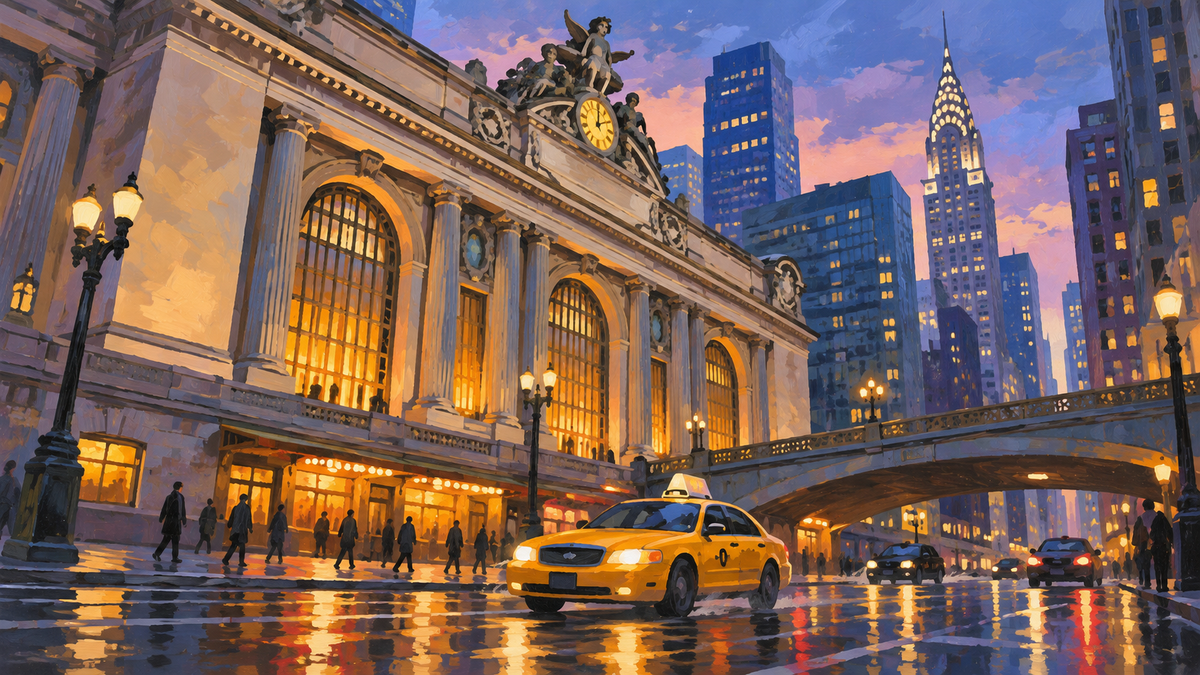
The Grand Central Terminal street scene uses evening light differently. Historic architecture anchors the image, while a yellow taxi and reflections on wet pavement introduce smaller accents around it. The building gives you a more stable place to rest your eye.
When comparing the two, consider whether you enjoy many separate flashes of color or a composition organized around one substantial building. During painting, the dark areas matter as much as the bright ones: they separate the lit shapes and help keep neighboring windows, signs and reflections distinct.
Central Park and Brownstone Streets: Let the Season Lead
In the Central Park autumn scene, orange and golden foliage surrounds a stone bridge and reflective water. The skyline sits farther away, giving trees and their reflections much of the foreground attention.
The Manhattan cherry blossom street design brings seasonal color into a neighborhood setting. Pink flowers, warm brownstone facades and planters sit closer to the viewer, with the Empire State Building rising in the distance. The architecture identifies the city, while the blossoms establish the season.
If the water, foliage and changing light are what attract you most, the broader landscape paint by numbers collection offers more scenery to explore. Within the New York series, these park and neighborhood views let natural elements share the picture with buildings.
Notice the Shapes That Make a Landmark Recognizable
The Flatiron Building’s narrow, wedge-shaped form gives its street scene a strong architectural focus. In the Statue of Liberty harbor composition, the raised torch and the outline of the figure establish the subject against the water and skyline. These distinctive shapes help a painting read clearly before you notice its smallest details.
Use that idea when planning a painting session. You might complete an arch and the space beneath it, a section of the skyline against the sky, or the main outline of a building. Finishing a recognizable part can make progress easier to see than working through scattered windows across the entire canvas.
Look closely at the detail you will actually be painting. Bridge cables, window rows, branches and reflections can all involve narrow sections. A calm-looking scene can still be detailed; when a numbered-canvas preview is available, use it to judge the layout alongside the finished artwork.
Your Own New York View Can Become the Painting
City Photographs and Natural Landscapes Can Both Be Customized
Perhaps the view you want is a photograph from your own trip: the street outside your hotel, a river crossing, a favorite park bench or the skyline seen from your window. City scenes and natural landscape photographs can both become custom PaintEasy paint by numbers kits.
You can turn your own photo into a custom paint by numbers kit directly on the product page. Use its image-upload field to add your photograph, then review the available options before ordering. The same route works for scenery beyond New York, including mountain views, coastlines, countryside and other cities.
Choose a Photograph with One Clear Priority
Start by deciding what makes the photograph worth painting. If it is the bridge, choose an image in which its structure is clearly visible. If it is a street, keep enough of the surrounding buildings to preserve the sense of place. For a landscape, look for a clear relationship between foreground, water or land, and sky.
A few checks can help you choose between similar photographs:
-
Subject size: Make sure the landmark or view that matters occupies enough of the image to remain recognizable.
-
Light and separation: Look for visible differences between buildings and sky, or between trees and their surroundings.
-
Sharpness: Choose a clear original photograph, especially for night scenes where movement can blur architecture.
-
Small details: Consider whether the image still works if tiny signs, distant faces or individual windows are simplified.
A numbered painting translates a photograph into areas of paint, so some detail and color variation may be simplified. Choose a photograph whose main shapes already tell the story you want to keep.
Choose the New York You Want to Keep Seeing
You might be drawn to DUMBO’s framed bridge view, the open water beneath Brooklyn Bridge, Times Square after dark or the seasonal colors of Central Park. Each gives a different part of the city the leading role.
Browse the New York painting designs with that preference in mind. Look for the viewpoint, light and details you will enjoy returning to as the painting takes shape.