


In this article
Orange foliage is the quickest sign of fall, but it is not the only one. An autumn painting can be built from low sunlight, a thinning canopy, wet reflections, ripe fruit, warmer indoor light or the small seasonal details that appear around people and animals. Remove those relationships and a picture may simply look orange. Keep them, and the season remains readable even when the palette includes blue, green, pink or deep violet.
The current PaintEasy Autumn Paint by Numbers collection shows the season across forest paths, lakes, European and American city streets, harvest still lifes, quiet windows, animals and imaginative scenes. Looking for the clues below gives you a more precise way to choose among them: not merely by favorite color, but by the kind of autumn atmosphere you want to paint.
1. The Canopy Changes the Amount of Sky You Can See
Autumn Trees Are More Than a Warm Color Field
A summer canopy often reads as a dense mass. In an autumn scene, separate branches, gaps between leaves and a carpet of fallen foliage can become equally important. Those openings let cool sky appear between warmer shapes and make the tree feel as though it is changing rather than simply covered in orange paint.
Compare a tree avenue with a close-up maple branch. The avenue uses repeated trunks and a narrowing path to carry the season into the distance. A close view depends on individual leaf silhouettes, overlapping edges and the light passing through them. Both are autumn subjects, but they offer very different painting rhythms.
If the changing canopy is the part you want to spend most time on, the Forest Paint by Numbers collection is the closest subject branch. The Autumn collection narrows that broader forest theme to seasonal change; Forest also includes woodland scenes whose identity does not depend on fall.
2. Cool Water Makes Warm Foliage Look Warmer
Reflections Repeat the Season Without Copying It Exactly
Many autumn landscapes gain their character from a warm-and-cool relationship. Copper trees stand beside blue water. Red foliage reflects in a gray river. Gold leaves sit above shadowed rowboats or a dark stream. The water does not need to repeat every leaf; it usually compresses the trees into longer, softer areas of color.
This contrast explains why some fall paintings remain distinctly autumnal even when orange occupies less than half the canvas. The cool area gives the warm foliage something to act against. In a lake or river composition, look at whether the reflection is nearly symmetrical, broken by ripples or interrupted by boats, rocks and banks. That structure will shape much of the painting experience.
For a wider choice of mountains, rivers, lakes and countryside across every season, move upward into Landscape Paint by Numbers. Autumn is a seasonal branch within that broader scenic subject, while the dedicated fall collection keeps the change of season central.
3. Autumn Light Enters Cities Differently
Buildings Stay the Same, but the Street Around Them Changes
A landmark alone does not make a city scene autumnal. The seasonal evidence often sits around it: golden trees lining the avenue to Big Ben, leaves framing the Eiffel Tower, damp pavement reflecting a tram, or a canopy of changing trees beneath the Empire State Building.
These designs rely on contrast between permanent architecture and temporary color. Stone, glass, towers and bridges identify the place; foliage, angled sunlight and reflective streets identify the time of year. That makes an autumn city painting feel different from a forest scene even when the leaf palette is similar.
Choose the Cityscape Paint by Numbers collection when the destination or architecture matters more than the season. Stay in Autumn when the transformation of the street is the main reason the image appeals to you.
4. Harvest Objects Bring the Season Indoors
Pumpkins, Apples, Grapes and Wine Suggest a Point in the Year
Autumn does not have to show an outdoor landscape. A basket of apples and grapes, a wine glass beside a vineyard, pumpkins by candlelight or a seasonal snack box can carry the same time-of-year association through objects.
The strongest harvest compositions usually use more than one clue. Ripe fruit establishes the subject, while wooden surfaces, dried leaves, low sunlight or candlelight reinforce it. A pumpkin on an empty white background would read as an isolated object; a pumpkin surrounded by leaves and warm shadows begins to create a season.
PaintEasy does not currently have a separate Thanksgiving collection, so these harvest designs should not be treated as an invented Thanksgiving subcategory. They can suit fall decorating or a personal Thanksgiving activity, but their verified collection relationship is with Autumn rather than a dedicated Thanksgiving page.
5. Window Scenes Show the Border Between Outdoors and Indoors
Books, Coffee and Warm Light Create a Quieter Kind of Fall
A window composition often contains two autumn experiences at once. Outside, leaves fall or glow in the afternoon light. Inside, a book, cup, blanket, vase or wooden sill creates a protected foreground. The glass or window frame separates the cool open air from the warmer interior.
This is why a windowsill scene can feel seasonal without a wide landscape. The picture asks you to notice the boundary: branches beyond the glass, leaves entering the frame, steam rising from a cup, or sunlight landing on a page. If you prefer small domestic details to distant scenery, this is a useful branch of the Autumn collection to compare.
6. Animals Change the Scale and Mood of the Season
A Deer on a Path Feels Different from a Sleeping Hedgehog
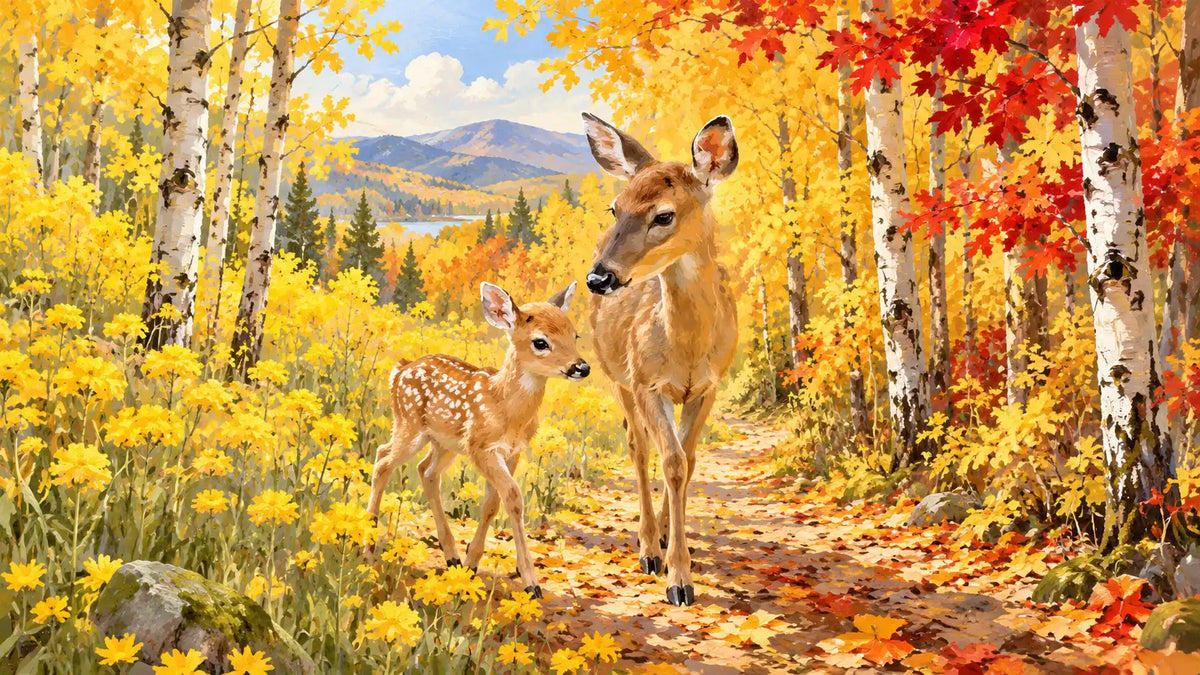
Autumn animals do not all serve the same role. A deer farther down a birch path gives scale to the forest. A fox family beside a lake makes the setting feel inhabited. A sleeping hedgehog or fox mother and baby brings the viewer close to the leaves and turns the season into a softer animal portrait.
Other designs use fall as a decorative setting around a clearer portrait, such as an owl with sunflowers, a cat beneath golden ginkgo leaves or a bird on an autumn branch. Decide which relationship leads the picture: are you choosing an animal surrounded by fall, or a fall landscape in which an animal appears?
If the species and expression matter first, continue into Paint by Numbers Animals. If the leaf color, woodland light and seasonal setting remain the main attraction, Autumn is the more precise destination.
7. Autumn Can Cross Into Halloween Without Becoming the Same Theme
Pumpkins Are the Bridge; Ghosts and Black Cats Change the Search Intent
A pumpkin can belong to an autumn harvest still life without being Halloween art. The relationship changes when the image adds a ghost, a black cat, a darker magical setting or another unmistakable celebration cue. PaintEasy currently has two designs shared between the Autumn and Halloween collections: a friendly ghost in a pumpkin meadow and a black-cat, books and pumpkin triptych.
That real overlap is the reason to link the Halloween Paint by Numbers collection. It is not a replacement for Autumn. Halloween narrows the intent to one celebration, while Autumn also includes forests, cities, animals, harvest objects and quiet interiors with no spooky element.
For seasonal celebrations beyond Halloween, the broader Holiday Paint by Numbers collection is the appropriate festival hub. Christmas should not be presented as a child of Autumn: it has its own collection and belongs to a later seasonal and holiday search.
Where Autumn Sits Among PaintEasy Collections
Use Season First, Then Follow the Subject You Care About
The 4 Seasons Paint by Numbers collection is the clearest parent-level theme because it groups work around seasonal change. Autumn is its focused fall branch. Winter is the closest season-level sibling, while Landscape, Forest, Cityscape, Animals and Flowers are subject-led collections that can overlap with autumn imagery.
A four-season artwork can show spring, summer, autumn and winter in one composition or coordinated set. That is different from a painting devoted entirely to fall. If you want to compare the shift itself, begin with 4 Seasons. If you want to remain among amber leaves, harvest light and fall settings, use Autumn. When colder air, bare branches or snow becomes the leading cue, move across to Winter Paint by Numbers.
Choose the Kind of Autumn You Want to Paint
Start by ignoring the product title for a moment. Look at the image and ask what makes the season readable. Is it the broken canopy, the warm reflection in cool water, leaves around a landmark, harvested fruit, a protected windowsill, an animal among fallen foliage or a clear Halloween symbol?
That answer tells you more than “I like orange.” It identifies the visual relationship you will keep working on as the numbered areas turn into a finished picture.
Browse the Autumn Paint by Numbers Kits and choose the clue that holds the season together for you—whether it appears across an entire forest or in one leaf beside a warm cup.