


In this article
In recent years, the idea of “home” has shifted beyond functionality.
For many people, home is no longer just a place to rest —
it has become a space for expression, routine, and emotional balance.
Across lifestyle blogs, home decor platforms, and creative communities, one change appears consistently:
creative hobbies are increasingly becoming part of how people design and experience their living spaces.
This article looks at several emerging patterns behind that shift — and why guided creative activities are gaining renewed attention.
1. Home Spaces Are Becoming More Personal, Not Just Aesthetic
Interior design trends have long focused on visual style: color palettes, furniture, and layout.
More recently, however, many homeowners and renters are prioritizing personal meaning over purely decorative elements.
Instead of buying artwork solely for visual appeal, people are displaying items connected to experiences:
-
handmade objects
-
completed projects
-
creative outcomes tied to specific moments
These objects function not only as decor, but as reminders of time spent and activities completed.
2. Creative Hobbies Are Moving From Storage to Display
Traditionally, hobbies happened quietly and privately — then disappeared into drawers or boxes.
Now, finished creative work is increasingly being incorporated into visible living areas:
-
framed crafts
-
completed puzzles
-
painted canvases
-
DIY pieces used as wall accents
This reflects a broader lifestyle preference:
activities that leave something tangible behind.
In this context, creative hobbies serve a dual purpose — the process itself, and the lasting physical result.
3. Guided Creativity Is Gaining Attention Among Adults
Another noticeable pattern is the rise of guided creative activities.
Unlike open-ended artistic tools, guided formats provide:
-
clear starting points
-
structured steps
-
predictable progress
-
a defined finish
For many adults, especially those without formal creative training, this structure lowers the barrier to participation.
Paint-by-numbers is one example of this broader category, offering a format where people can engage creatively without needing to make constant decisions.
For readers unfamiliar with how this type of activity works in practice, a detailed walkthrough of the painting process explains how paint-by-numbers is structured from setup to completion, and why the guided format feels approachable even for beginners.
4. At-Home Activities Are Being Chosen More Intentionally
Spending time at home is no longer viewed as a fallback option.
Across lifestyle writing, there is growing interest in:
-
calm routines
-
screen-light activities
-
hands-on engagement
-
experiences that feel restorative rather than stimulating
Creative hobbies fit naturally into this shift, especially when they require focus without pressure.
They offer a way to slow down without disengaging completely.
5. Shared Creative Activities Are Appearing in Relationship Routines
While many creative hobbies are still enjoyed individually, some people are incorporating them into shared routines.
Rather than structured “events,” these activities often take place casually:
-
over multiple evenings
-
alongside conversation
-
without a fixed schedule
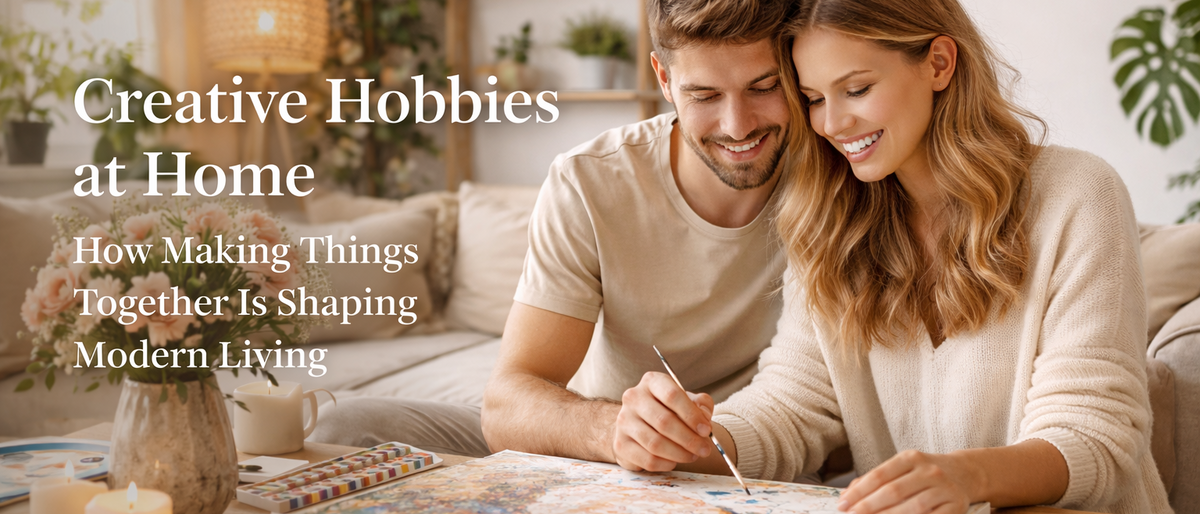
In some cases, paint-by-numbers has been used as a shared activity, where two people work side by side on coordinated pieces.
There are also guides exploring how paint-by-numbers can be used specifically as a couple activity, focusing on pacing, setup, and how shared creative time fits into everyday relationship routines rather than formal date planning.
In these scenarios, the emphasis is less on the finished artwork and more on the time spent together.
6. Creative Output Is Being Valued for Process, Not Performance
Another consistent theme is the reduced emphasis on artistic performance.
Many people engaging in creative hobbies today are not aiming to:
-
improve technical skill
-
develop a personal style
-
produce gallery-quality results
Instead, the value lies in:
-
the act of making
-
visible progress
-
reaching completion
This has made accessible formats like paint-by-numbers appealing to a wider audience, particularly those seeking balance rather than mastery.
7. The Role of Completion in Everyday Wellbeing
Finishing a creative project offers a sense of closure that is increasingly rare in daily digital life.
Unlike online tasks that remain abstract, creative projects:
-
have a clear endpoint
-
result in a physical object
-
provide visible evidence of effort
For some people, this sense of completion is as important as the activity itself.
It explains why completed creative work is often kept, framed, or displayed rather than stored away.
Looking Ahead
As home living continues to evolve, creative hobbies are likely to remain part of how people shape their spaces and routines.
Not as performance-based pursuits,
but as structured, accessible activities that combine process, presence, and a tangible result.
Whether used individually or shared with others, these activities reflect a broader interest in slowing down and engaging with the physical world in meaningful ways.